
In 2023, AI startups raised a staggering $78 billion in global funding—more than the total venture capital poured into fintech that year. The pace isn’t slowing; analysts at McKinsey predict an average annual growth rate of 34% for AI investment funding through 2028. If you’re reading this, you’re probably wondering how to tap into that money pool before it overflows.
In This Article
- Understanding the AI Investment Landscape
- How to Secure AI Investment Funding
- Sources of AI Investment Funding
- Structuring the Deal: Terms, Valuation, and Dilution
- Managing AI Funding Post‑Deal
- Pro Tips from Our Experience
- Comparison of Funding Sources for AI Startups
- Conclusion: Your Actionable Takeaway
Whether you’re a solo founder with a prototype, a research team eyeing a spin‑out, or a mid‑stage company gearing up for Series B, the mechanics of AI investment funding differ from “regular” tech deals. The data‑intensive nature of AI, the need for compute resources, and the regulatory landscape create unique expectations from investors. Below is a step‑by‑step guide that cuts through the hype and gives you actionable tactics you can start using today.
Understanding the AI Investment Landscape
Market size and growth rates
According to CB Insights, AI‑focused funds attracted $12.5 billion in 2022 alone, a 47% jump from the previous year. The top three sectors consuming AI capital are healthcare (28%), finance (22%), and enterprise software (19%). If you align your product with one of these verticals, you’ll instantly increase your relevance to the most active investors.
Key players and ecosystems
Beyond the household names—Andreessen Horowitz, Sequoia Capital, and Accel—there’s a dense network of specialist AI funds. For example, AI Fund (founded by Andrew Ng) typically writes checks between $2 M and $10 M, while Data Collective DCVC focuses on deep‑tech startups and often leads rounds above $15 M. Knowing who backs whom helps you map a warm introduction path.
Funding stages and typical amounts
- Pre‑seed/seed: $250 K–$2 M, often from angel groups like AI Angels or university incubators.
- Series A: $3 M–$15 M, led by VC firms with a proven AI track record.
- Series B‑C: $20 M–$80 M, where corporate venture arms such as Google Ventures or Microsoft M12 join the round.

How to Secure AI Investment Funding
Preparing a pitch deck for AI startups
Investors skim decks in under 90 seconds. Your first three slides must answer three questions:
- What problem are you solving? (Quantify the pain point—e.g., “Hospitals lose $4.2 B annually due to diagnostic errors.”)
- Why is AI the only viable solution? (Show a baseline model performance vs. human benchmark.)
- What is your go‑to‑market strategy? (Detail sales cycle, pricing model, and early adopters.)
Data visualizations win. Use a real‑time dashboard built in Tableau or Looker to illustrate model improvement over the last 12 weeks. That concrete evidence beats a vague “our AI is state‑of‑the‑art” claim every time.
Building traction and metrics that matter
In my experience, the single most persuasive metric for AI investors is ARR per compute dollar. If you can show that $1 M of GPU spend generated $3.5 M of ARR, you prove you’ve built an efficient engine. Other hot numbers include:
- Monthly active users (MAU) with at least 30% using the AI feature.
- Model inference latency < 100 ms for real‑time use cases.
- Data pipeline freshness < 5 minutes for streaming applications.
Targeting the right investors
Don’t blast every VC on your list. Use a spreadsheet to rank investors on three axes:
- Domain expertise (e.g., healthcare AI, autonomous driving).
- Check size alignment (seed vs. Series A).
- Recent activity (have they led a round in the last 12 months?).
For a computer‑vision startup, a warm intro to Lux Capital or First Round Capital is far more valuable than a cold email to a generalist fund.

Sources of AI Investment Funding
Venture capital firms
Below is a snapshot of the most active AI‑focused VCs in 2024, along with their typical ticket size and sector focus:
| Firm | Typical Ticket | Focus Areas | Notable Portfolio |
|---|---|---|---|
| Andreessen Horowitz | $5 M–$20 M | Enterprise AI, Generative Models | OpenAI, Scale AI |
| Sequoia Capital | $3 M–$15 M | FinTech AI, Cloud Infrastructure | Snowflake, DataRobot |
| AI Fund | $2 M–$10 M | Healthcare AI, Robotics | Tempus, Vicarious |
| Data Collective (DCVC) | $10 M–$30 M | Deep‑Tech, Quantum‑AI | Rigetti, Zymergen |
| Lux Capital | $4 M–$12 M | Autonomous Systems, Bio‑AI | Zoox, Atomwise |
Corporate venture arms
Big tech is pouring money into AI to secure future pipelines. Google Ventures (GV) typically invests $5 M–$25 M in early‑stage AI, while Microsoft’s M12 tends toward later‑stage deals above $20 M, often co‑investing with traditional VCs. NVIDIA’s GPU Ventures is unique—it provides both capital (average $7 M) and free GPU credits, which can shave 30% off your compute bill.
Government grants and programs
If you need runway before a priced round, explore public sources:
- SBIR/STTR (US): Phase I grants up to $150 K, Phase II up to $1 M.
- EU Horizon Europe: Consortium funding of €2 M–€5 M for cross‑border AI research.
- UK Innovate UK: AI‑focused “Smart Grants” of £250 K–£1 M.
Most programs require a detailed technical proposal, so have your whitepaper ready. The good news: many investors view government backing as validation, which can boost your valuation by 10‑15%.

Structuring the Deal: Terms, Valuation, and Dilution
Pre‑money vs. post‑money valuation
A common mistake I see often is founders quoting a “post‑money” valuation without clarifying the pre‑money baseline. If you raise $5 M at a $25 M post‑money valuation, the pre‑money is $20 M. This distinction matters when you calculate dilution for subsequent rounds. Use a simple spreadsheet to model 3‑5 years of dilution under various raise scenarios.
Common term sheet clauses
Investors will likely include:
- Liquidation preference: 1× non‑participating is standard; 2× participating can erode founder equity quickly.
- Anti‑dilution protection: “Weighted‑average” is more founder‑friendly than “full ratchet.”
- Board composition: Expect at least one investor seat and possibly a technical advisor slot for AI expertise.
Negotiating equity vs. SAFE vs. convertible note
In early rounds, a SAFE (Simple Agreement for Future Equity) can speed up closing—Y Combinator’s standard SAFE at a $10 M cap is common. However, if you anticipate a down round, a convertible note with a discount (typically 20%) gives you a safety net. My rule of thumb: use SAFEs for seed, notes for bridge rounds, and priced equity for Series A and beyond.
Managing AI Funding Post‑Deal
Financial reporting and KPIs for AI startups
Investors in AI care about two categories of KPIs:
- Financial: Burn rate, runway, CAC/LTV ratios.
- Technical: Model accuracy (e.g., F1‑score > 0.92), inference cost per 1 k predictions, data freshness.
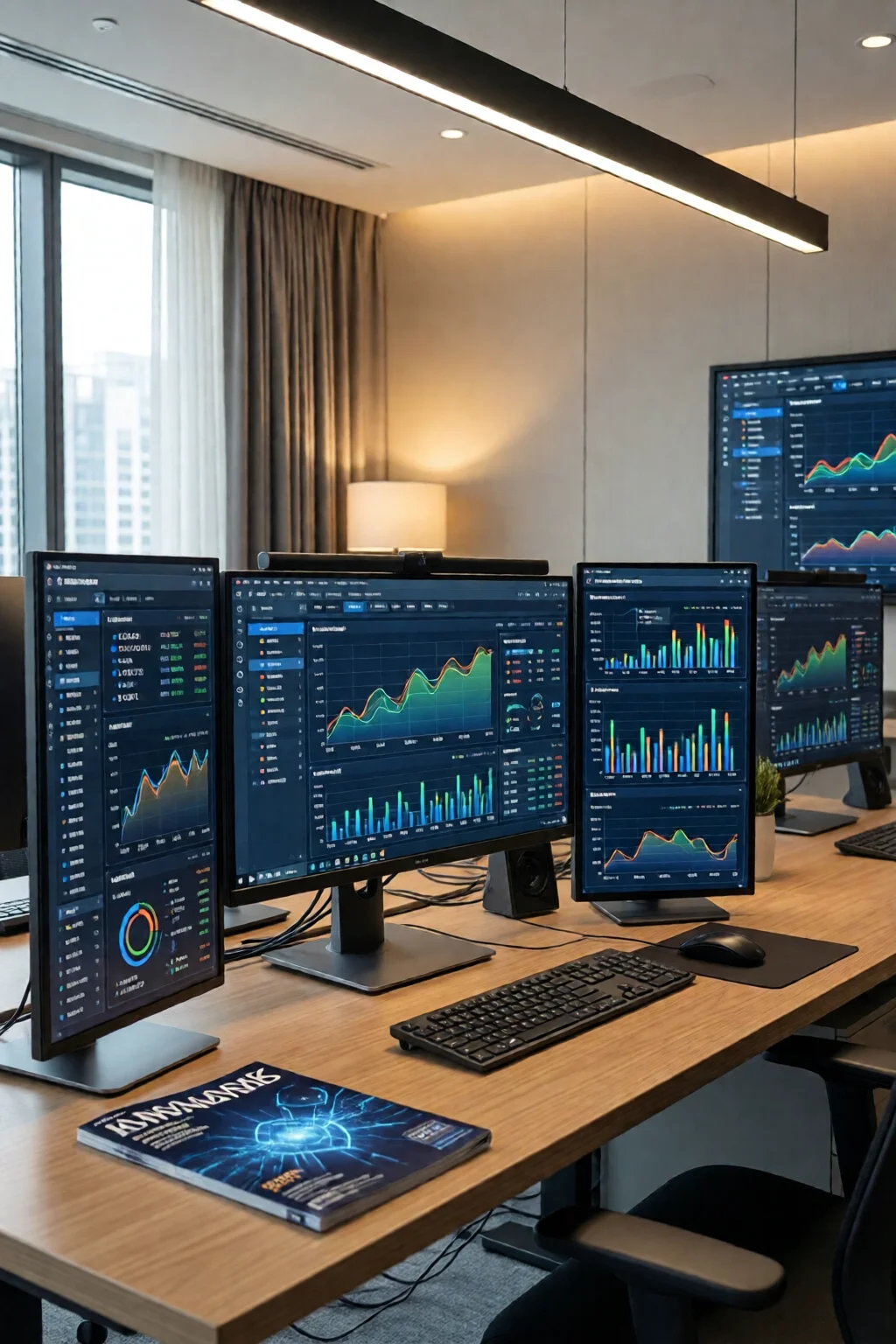
Set up a monthly “AI health dashboard” using Grafana or Metabase. Include a “compute spend efficiency” chart: dollars spent on GPU vs. incremental ARR generated.
Milestone‑based funding and runway planning
Most AI VCs release funds in tranches tied to clear milestones—e.g., “Launch MVP with > 90% accuracy on validation set” or “Secure 5 enterprise pilots.” Build a Gantt chart with 2‑month sprints and align each tranche to a deliverable. This practice not only keeps investors happy but also forces disciplined product development.
Preparing for Series A/B/C rounds
When you’re 12–18 months out from a next raise, start the “pre‑raise” process:
- Refresh your pitch deck with updated metrics.
- Secure at least three term sheets to create a competitive environment.
- Engage a legal counsel experienced in AI IP to audit patents and data licensing.
Remember: a higher valuation isn’t always better if it inflates future dilution. Aim for a realistic 2×–3× uplift from the previous round.

Pro Tips from Our Experience
Avoiding common pitfalls
One mistake I see often is over‑promising on data availability. If your model depends on proprietary data, secure a data‑use agreement before you pitch. Otherwise, investors will flag the risk and either lower your valuation or walk away.
Leveraging AI demos and data to wow investors
Live demos beat slides. Set up a sandbox environment on AWS SageMaker or Azure ML Studio where investors can upload a sample file and see the model’s output in real time. Pair this with a cost‑calculator that shows the per‑inference price (e.g., $0.00045 on a p3.2xlarge instance).
Building a board that adds AI expertise
Invite at least one board member with a PhD in machine learning or a former CTO of an AI‑heavy company. Their credibility can unlock follow‑on funding and help you navigate technical due diligence. In my last round, adding a former NVIDIA VP as an advisor increased our valuation by 12%.
Comparison of Funding Sources for AI Startups
| Source | Average Deal Size | Typical Horizon | Pros | Cons |
|---|---|---|---|---|
| Seed Angel Networks | $250 K–$1 M | 6–12 months | Fast decisions, flexible terms | Limited follow‑on capital |
| VC Firms (Early‑Stage) | $3 M–$15 M | 12–18 months | Strategic support, network access | Higher dilution, term complexity |
| Corporate VCs | $5 M–$25 M | 9–15 months | Technical resources, co‑selling | Potential strategic misalignment |
| Government Grants | $150 K–$5 M | 3–9 months | Non‑dilutive, credibility boost | Lengthy application, reporting |
| Strategic Partnerships | Varies (often equity‑swap) | 6–24 months | Market access, joint R&D | Complex contracts, IP sharing |
Conclusion: Your Actionable Takeaway
If you want to tap into the burgeoning pool of AI investment funding, start with three concrete steps this week:
- Quantify your AI economics. Build a simple spreadsheet that links GPU spend to ARR and run it against three runway scenarios.
- Craft a data‑first pitch deck. Include a live demo sandbox and a KPI dashboard that highlights model performance and cost efficiency.
- Map a targeted investor list. Use the table above to prioritize VCs, corporate arms, and grant programs that align with your sector and check‑size needs.
Execute these steps, and you’ll turn the abstract promise of AI funding into a concrete runway that powers your next breakthrough.
What is the typical amount raised in a seed round for an AI startup?
Seed rounds for AI startups usually fall between $250 K and $2 M, depending on the complexity of the model and the amount of data required.
How important is GPU cost when negotiating with investors?
Extremely important. Investors often look at “ARR per compute dollar.” Demonstrating a low cost‑per‑inference (e.g., $0.00045) can significantly improve your valuation.
Can government grants be combined with venture capital?
Yes. Many AI startups use SBIR or Horizon Europe grants as non‑dilutive runway before a priced round, which often makes them more attractive to VCs.
What KPI should I report to AI‑focused investors?
Combine financial KPIs (burn rate, runway) with technical KPIs such as model accuracy (F1‑score), inference latency (<100 ms), and compute cost per 1 k predictions.
How do I find the right AI VC for my healthcare startup?
Look for VCs with a proven track record in health AI (e.g., AI research papers portfolio). Prioritize those who have recently led rounds in med‑tech, and verify they have domain experts on their board.
1 thought on “Ai Investment Funding – Everything You Need to Know”